Building Scalable Client Portals: Architecture Best Practices
UA Labs Team
Contributing Tech Specialist
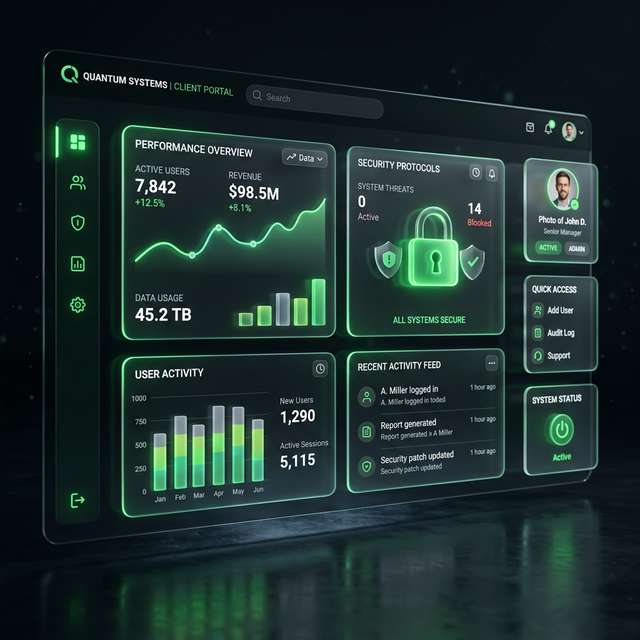
As businesses grow, their primary interface with customers—the Client Portal—must evolve from a simple dashboard to a robust, high-availability platform. At UA Labs, we frequent build systems that start with 1,000 users and must rapidly scale to 100,000+ without a rewrite. This guide outlines the architectural decisions that make this possible.
The Foundation: Choosing Your Multi-Tenant Strategy
Multi-tenancy is the soul of a client portal. How you isolate data determines your security posture, cost efficiency, and scalability limits. There is no one-size-fits-all answer; the choice depends on your specific industry's compliance and data volume.
| Strategy | Best For | Complexity | Isolation Level |
|---|---|---|---|
| Shared Schema | Large-scale SaaS / Low budget | Medium | Software-level filters |
| Database per Tenant | Finance / Healthcare / Legal | High | Highest (Physical/Logic isolation) |
| Schema per Tenant | Medium scale B2B | Medium-High | Cross-over isolation |
Optimizing Performance at the Edge
Users in 2025 expect instant feedback. If your portal is global, a central server in Virginia won't cut it for a user in Berlin. We implement Edge Distribution strategies to bring the 'First Byte' closer to the user.
- Global Edge Caching: Storing static assets and frequently accessed API responses at the network edge.
- Edge Middleware: Handling authentication and redirections before the request ever reaches your main server.
- Optimistic UI Updates: Instantly updating the UI on user actions while the server syncs in the background.
- Adaptive Image Serving: Serving the perfect image size based on the user's device and connection speed.
Security & Security Protocol Reinforcement
A breach of a client portal is a breach of trust. We build with a Zero-Trust Architecture mindset. This means every request is authenticated, authorized, and logged, regardless of where it originates.
Mandatory Security Layers:
- RBAC (Role-Based Access Control): Granular permissions for admins, managers, and standard users.
- Detailed Audit Logs: Tracking who viewed what, and when—crucial for compliance.
- API Throttling: Preventing scraping and brute-force attacks at the gateway level.
- Automatic Session Timeouts: Protecting users on shared or public computers.
Case Study: Scaling to 100k+ Users
When we recently helped a logistics client scale their portal, we moved from a monolithic architecture to a Service-Oriented model. By separating 'User Management' from 'Order Tracking', we could scale the tracking engine horizontally during peak seasons without paying for extra overhead in the user dashboard.
Conclusion: Building for the Long Term
Scalability is not a one-time task; it's a continuous process of identifying and removing bottlenecks. By starting with a solid multi-tenant foundation and leaning into edge technologies, you can build a portal that doesn't just work today, but thrives tomorrow.
Enjoyed this article?
Share these insights with your network and help others build better software.