Database Scaling Strategies: When to Use SQL vs NoSQL
UA Labs Team
Contributing Tech Specialist
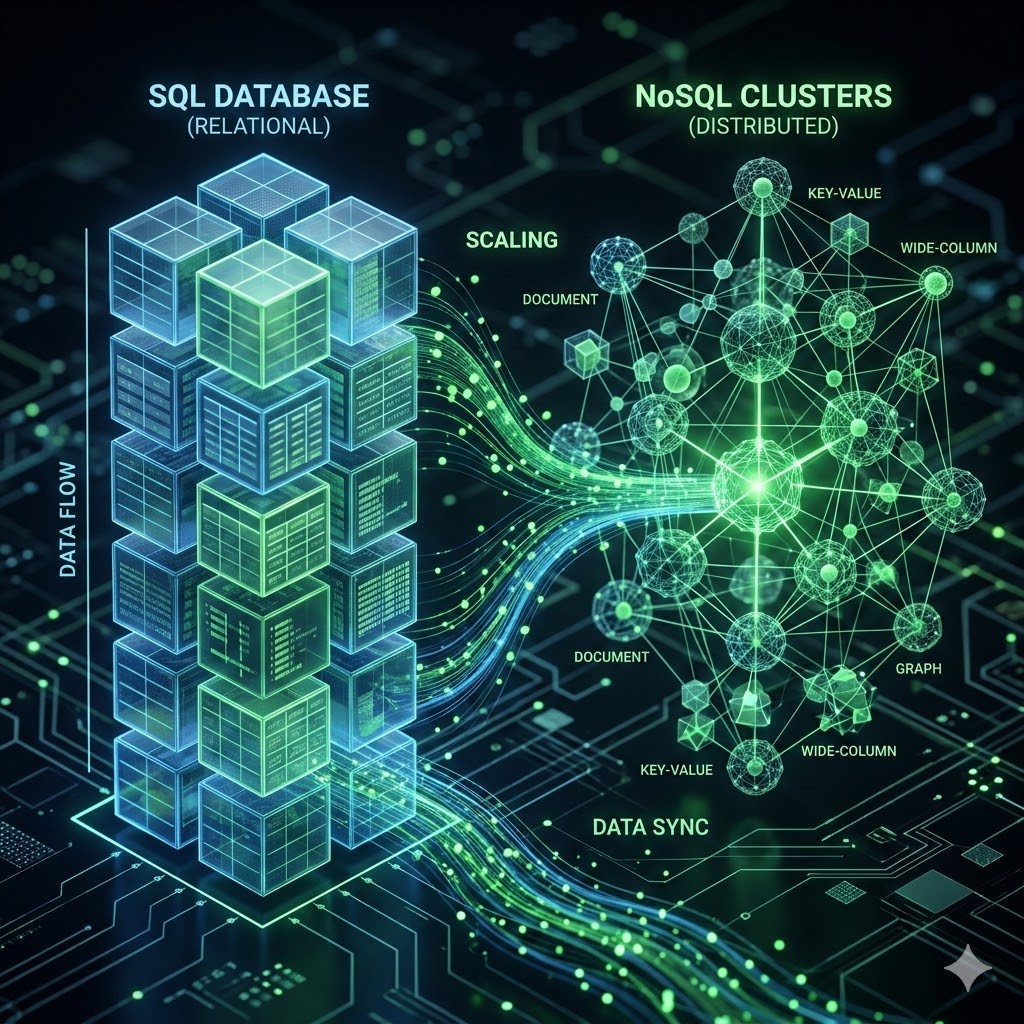
Choosing a database is the most consequential decision in any project. It's the one part of your stack that's truly 'sticky'. In 2025, the line between SQL and NoSQL has blurred, but their fundamental scaling characteristics remain distinct.
SQL Scaling: Vertical and Read Replicas
SQL databases like PostgreSQL are the gold standard for Data Integrity (ACID). Scaling them typically involves 'Vertical Scaling' (more CPU/RAM) or offloading traffic to 'Read Replicas'. For 95% of businesses, a well-tuned Postgres instance is all they'll ever need.
| Feature | SQL (Relational) | NoSQL (Distributed) |
|---|---|---|
| Data Structure | Rigid Schema | Dynamic / Fluid |
| Transactions | ACID (Safe) | BASE (Fast / Eventual Consistency) |
| Vertical Scaling | Excellent | Limited |
| Horizontal Scaling | Complex (Sharding) | Natural (Native-support) |
NoSQL Scaling: Native Distributed Power
When your data volume hits the petabyte range or your traffic has irregular massive spikes, NoSQL (like MongoDB or Cassandra) shines. Its ability to 'shard' data across multiple physical servers natively allows for near-infinite horizontal growth.
The 2025 Reality: Polyglot Persistence
Most of our modern enterprise builds use both. We use SQL for core business entities (Users, Payments, Orders) and NoSQL for high-volume logs, analytics, and content.
- Postgres: Core relational data.
- Redis: In-memory caching & rate limiting.
- ElasticSearch/Pinecone: Semantic & text search indexing.
- S3: Large object storage.
Conclusion
Don't choose based on hype. Choose based on your data access patterns. If you need relationships, go SQL. If you need massive, un-structured speed, go NoSQL.
Enjoyed this article?
Share these insights with your network and help others build better software.