Complete Guide to Marketplace Development in 2025
UA Labs Team
Contributing Tech Specialist
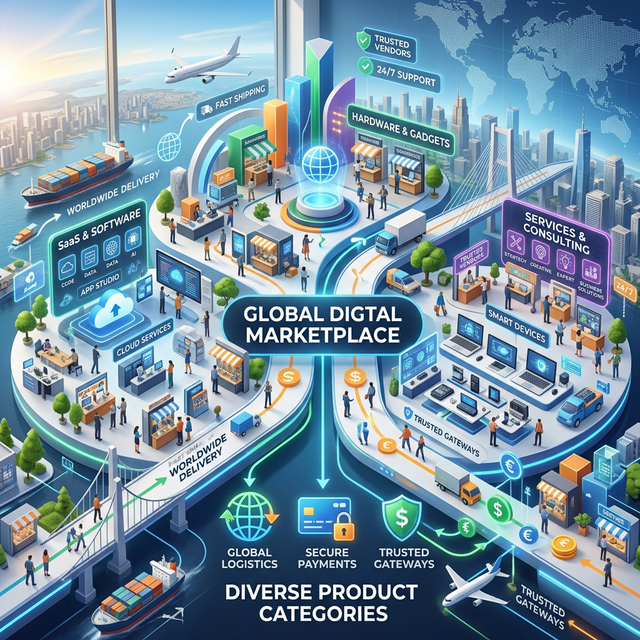
The 'Amazon effect' has shifted consumer and business expectations for marketplaces. To succeed in 2025, a marketplace must provide a seamless, multi-vendor experience that handles the complexities of Financial Orchestration and Trust Management flawlessly. At UA Labs, we specialize in high-stakes marketplace development.
The Three Pillars of Success
A great marketplace isn't just an e-commerce site; it's a three-sided ecosystem between Buyers, Sellers, and the Platform itself.
1. The Discovery Engine
Discovery is the heart of a marketplace. In 2025, this goes beyond simple search. We implement Semantic Vector Search, allowing users to find products based on intent rather than just keywords. Personalized recommendation engines ensure that every user sees a 'market' tailored to their specific needs.
2. Financial Orchestration
Handling money across multiple vendors is the biggest technical challenge. You need to manage split payments, escrow, refunds, and international tax compliance without the user ever seeing the 'seams'.
| Feature | Standard E-commerce | Modern Marketplace |
|---|---|---|
| Payment Model | Direct Merchant | Multi-party Split |
| Payouts | Instant total amount | Scheduled & Verified Vendor Payouts |
| Tax Compliance | Single VAT/GST | Dynamic Nexus Calculation per Vendor |
| Dispute Handling | Merchant-Buyer only | Platform-Mediated Escrow |
3. The Trust Framework
Without trust, there is no transaction. We build trust into the UI/UX through verified seller badges, transparent review systems, and automated fraud detection that protects both the platform and its users.
Technology Stack for 2025
To handle the dynamic nature of a marketplace, our preferred stack emphasizes speed and modularity.
- Frontend: Next.js 15+ for high SEO and performance.
- Search: Algolia or Pinecone for lighting-fast discovery.
- Payments: Stripe Connect or Adyen for global payout management.
- Database: PostgreSQL with Row-Level Security (RLS) for data integrity.
Step-by-Step: From MVP to Scale
Don't build everything at once. Focus on the core value proposition first.
Phase 1: The Core Transactional MVP
- Simple vendor onboarding.
- Standard product catalog.
- Basic payment processing.
Phase 2: Scale & Trust
- Advanced search/personalization.
- Dispute management system.
- Vendor dashboards & analytics.
Phase 3: Ecosystem Expansion
- API for 3rd-party integrations.
- Advertising/Promoted listing engine.
- Global multi-currency expansion.
Conclusion
Marketplace development is a marathon, not a sprint. By focusing on the fundamentals of discovery, finance, and trust, you can build a platform that attracts the best vendors and provides the best value to your buyers.
Enjoyed this article?
Share these insights with your network and help others build better software.